



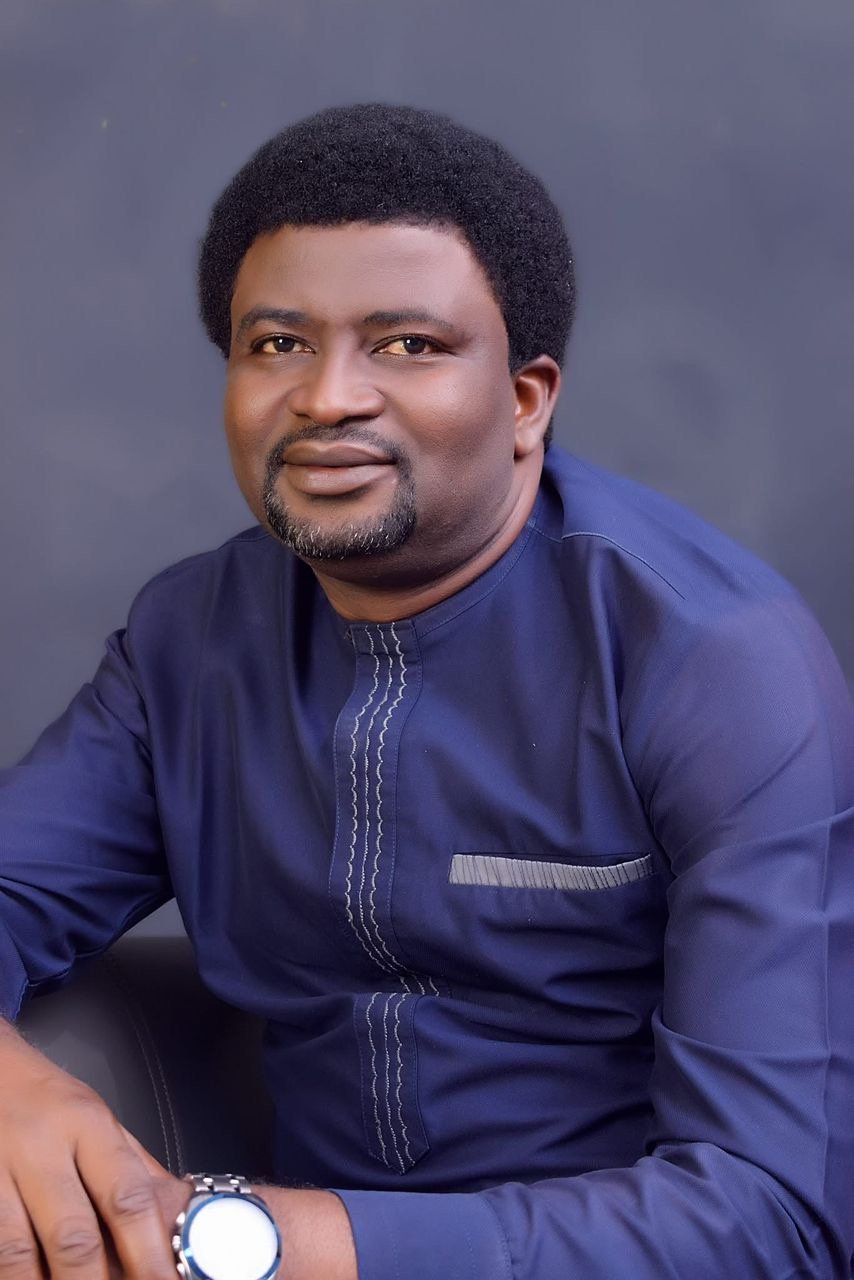
Ordinarily, I would not have dignified the recent fabrication circulating in the public space with a response. For quite some time now, I have deliberately chosen to distance myself from routine political commentaries, particularly in an environment where reasoned engagement is often supplanted by sentiments and expediency. However, it has become necessary to speak, if only to set the records straight and to defend the integrity of my name, which has been fraudulently appended to a poorly written and mischievous document advocating the zoning of the Northern Senatorial District ticket to the OBO Federal Constituency.
Let me state, without ambiguity, that I have no connection whatsoever with that document. It is entirely fake, deeply condemnable, and clearly the handiwork of confused, fearful, and desperate individuals who, knowing they cannot compete on the basis of performance, have retreated to the tired and divisive rhetoric of zoning. Their desperation is further exposed by their inability to even spell my name correctly; an elementary error that should, in itself, have alerted discerning minds to the fraudulent nature of their claims.
I am mindful that some friends and relatives may find this response uncomfortable. I urge them to take note that my silence should never be mistaken for consent, and my disposition towards restraint does not extend to allowing my name to be used as a tool for deception, blackmail, or the validation of falsehood and reinforcement of failure. Writing, for me, is not merely an intellectual exercise; it is also a moral obligation. As a historian, I am guided by the conviction that competence, not contrived arrangements such as zoning, ultimately delivers meaningful progress and development.
Permit me, therefore, to draw from the recent history of Obanliku Local Government Area where I come from to illuminate this point. Since the return to democratic governance in 1999, Cross River State has had three past governors drawn from the three senatorial districts. Under Governor Donald Duke of the Southern Senatorial District, Obanliku witnessed remarkable infrastructural transformation. Within his first 100 days, the Sankwala Ring Road was constructed. His administration also completed and commissioned other projects including the Obanliku General Hospital, the Bebi Airstrip, Utanga Safari Lodge, electrification projects across several communities, and the transformation of the Ranch Resort into a globally recognized tourism destination. The Obudu International Mountain Race, initiated under his leadership, placed our locality on the global sporting map. In fact, the Obudu International Mountain Race was endorsed by both the World Mountain Running Association (WMRA) and the International Association of Athletics Federation (IAAF) in 2005 shortly before Duke left office.
Governor Liyel Imoke of the Central Senatorial District not only sustained but deepened the developmental momentum he inherited. Under his administration, the road to the Ranch was transformed into a truly memorable experience, with the famed 22 breathtaking U-bends offering not just access, but pleasure and pride to all who traversed them. With equal commitment, he opened up our rural communities through the construction of critical asphalted roads, including the Basang East Road, Busi Road, and the Utuhu–Kakwe–Lishiche–Shikpeche corridor. These efforts were complemented by the rehabilitation and upgrading of numerous health centres and schools across the Local Government Area. It was, without doubt, a period in which Obanliku witnessed real, visible, and impactful dividends of democracy.
Then came Senator Ben Ayade, a son of the Northern Senatorial District and, indeed, of Old Obudu – our own kinsman whose grandmother was from Bendi in the same Obanliku LGA. Expectations were understandably high; optimism was widespread. Yet, the outcome was profoundly disappointing. The eight years of his administration left Obanliku with little or no meaningful legacy. Infrastructure deteriorated, flagship projects declined, and opportunities were squandered. The Ranch Resort lost its prominence even when he was visionary enough to appropriate a piece of the land on the Ranch to himself, the Bebi Airstrip was sacrificed and cannibalized by the Obudu-sited Cargo airport, and critical community projects were abandoned. What was once hope turned into frustration and regret.
This historical trajectory raises a fundamental question: should our political choices be guided by sentiment and zoning, or by competence and capacity to deliver? Experience has taught us that geographical affinity does not translate into development. The case of Obanliku and Ben Ayade sufficiently illustrates this. In the wider Nigerian political space, we have relatively faithfully rotated the presidency since 1999. To what extent can we say this rotation per se has brought progress and development to the country since then?
It is therefore troubling that some among us, driven by narrow interests, are once again promoting zoning as a panacea, even when it risks recycling failure. Those who cloak personal ambition in the garb of communal interest must be reminded that history is neither forgetful nor forgiving. As W.E.B. Du Bois warned, it is a tragedy when enlightened individuals and so-called leaders pursue private gains while neglecting the collective good of their people.
Obanliku – indeed, the entire Northern Senatorial District – must rise above this moment with clarity, courage, and a higher sense of purpose, placing the welfare and well-being of our people above all other considerations. We must resist the temptation to mortgage our future for selfish fleeting political calculations. The choice before us is clear: to continue along the path of sentiment and regression, or to embrace merit, competence, altruism, and accountability.
Let us, therefore, shift the conversation from where a candidate comes from to what a candidate can do. Let us demand evidence of capacity, a track record of service, and a commitment to delivering the dividends of democracy. Our past has taught us hard lessons; our future depends on whether we are willing to learn from them.
History is watching. Posterity will judge. Let us choose wisely.
Prof. Dave Imbua
