




A fresh controversy has erupted in the Federal Capital Territory (FCT) as the Global Integrity Crusade Network (GICN) has accused authorities of regulatory overreach, multiple taxation, and questionable contracting in the administration of environmental health services within the Abuja Municipal Area Council (AMAC).
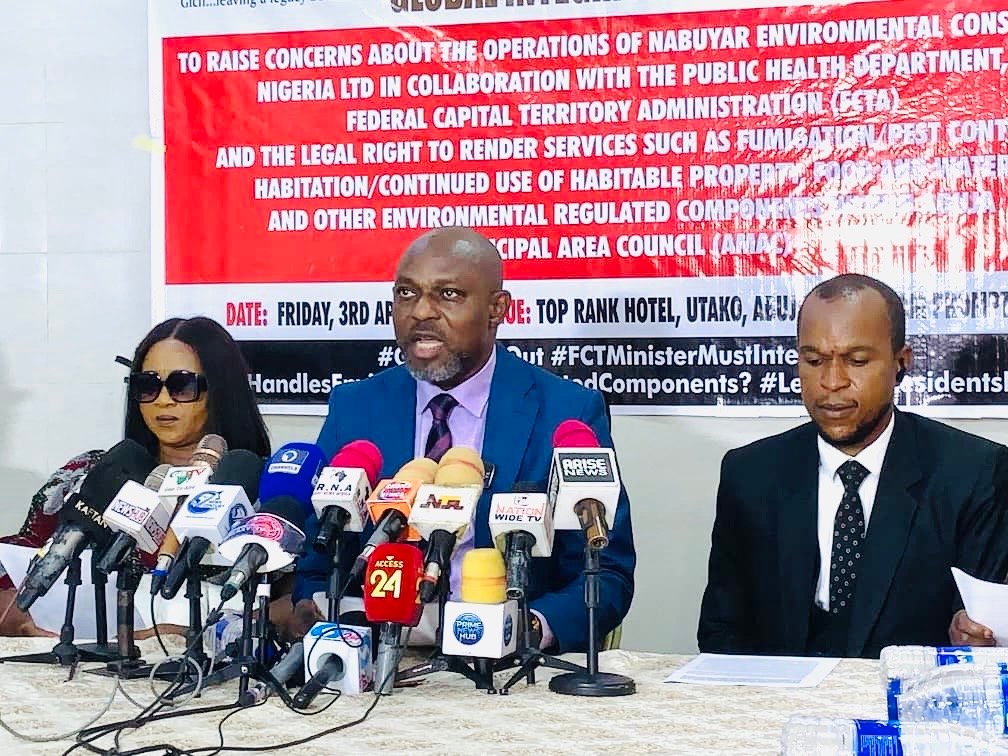
Speaking at a press conference in Abuja on Friday, the group described the situation as a “deepening institutional crisis” between the Federal Capital Territory Administration (FCTA) and AMAC.
Addressing journalists, GICN President, Edward Omaga, alleged that what initially appeared to be an administrative overlap has escalated into a legal dispute with far-reaching implications for residents and businesses in the territory.
Omaga maintained that, under the 1999 Constitution, local governments such as AMAC are empowered to regulate environmental sanitation and collect related levies. He, however, accused the FCTA—through its Public Health Department and in collaboration with a private firm, Nabuyar Environmental Consultants Nigeria Ltd—of imposing parallel compliance requirements.
According to him, the development has resulted in businesses being compelled to pay duplicate fees for the same services.
Citing a specific instance, Omaga disclosed that an affiliate of the group, Graylaw Practice Limited Partnership, paid ₦50,000 to AMAC and obtained a certificate of fitness for 2025, only to later receive an additional demand of ₦250,000 from Nabuyar Environmental Consultants.
He described the demand as “regulatory oppression” and called for its immediate suspension.
The group also raised concerns over the legitimacy of Nabuyar Environmental Consultants, alleging that records from the Corporate Affairs Commission indicate the company is inactive. It further claimed that the individual representing the firm, Dr. Obinatu Remigius, is neither a director nor a shareholder.
Omaga revealed that the group has submitted a Freedom of Information request to the Bureau of Public Procurement to determine whether due process was followed in awarding the consultancy contract.
He added that the dispute has already led to multiple prosecutions at Magistrate Courts in Abuja, which the group described as coercive and premature, given the unresolved jurisdictional issues between AMAC and the FCTA.
The GICN also referenced a March 2026 court ruling, noting that it has further complicated claims of exclusive regulatory authority by the FCTA.
The group called on the Minister of the FCT, Nyesom Wike, to urgently intervene by convening relevant stakeholders to resolve the impasse.
It also urged the Environmental Health Council of Nigeria to clearly define the agency responsible for environmental regulation within AMAC.
Additionally, the group called for the suspension of ongoing prosecutions and urged the Nigeria Police Force to investigate the activities of the private consultant.
Omaga warned that failure to address the issue could trigger protests, citing recent demonstrations by private school operators in Abuja over similar concerns.
He stated that the group is prepared to stage peaceful protests at key government institutions, including the National Assembly and the Federal Ministry of Environment, to demand accountability.
The organisation also cautioned against the use of laws such as the Cybercrimes Act to suppress dissent.
“As civil society actors, we will not be intimidated. Nigeria belongs to all of us, and we must ensure fairness, legality, and justice in governance,” Omaga said.
The unfolding dispute underscores growing tensions over regulatory authority in the FCT, raising concerns about its potential impact on businesses and public confidence in government institutions.
