




The Africa Polling Institute (API) has urged journalists to take the lead in promoting social cohesion through responsible reporting, emphasizing that the media remains critical in shaping public narratives that strengthen national unity, trust, and peaceful coexistence.
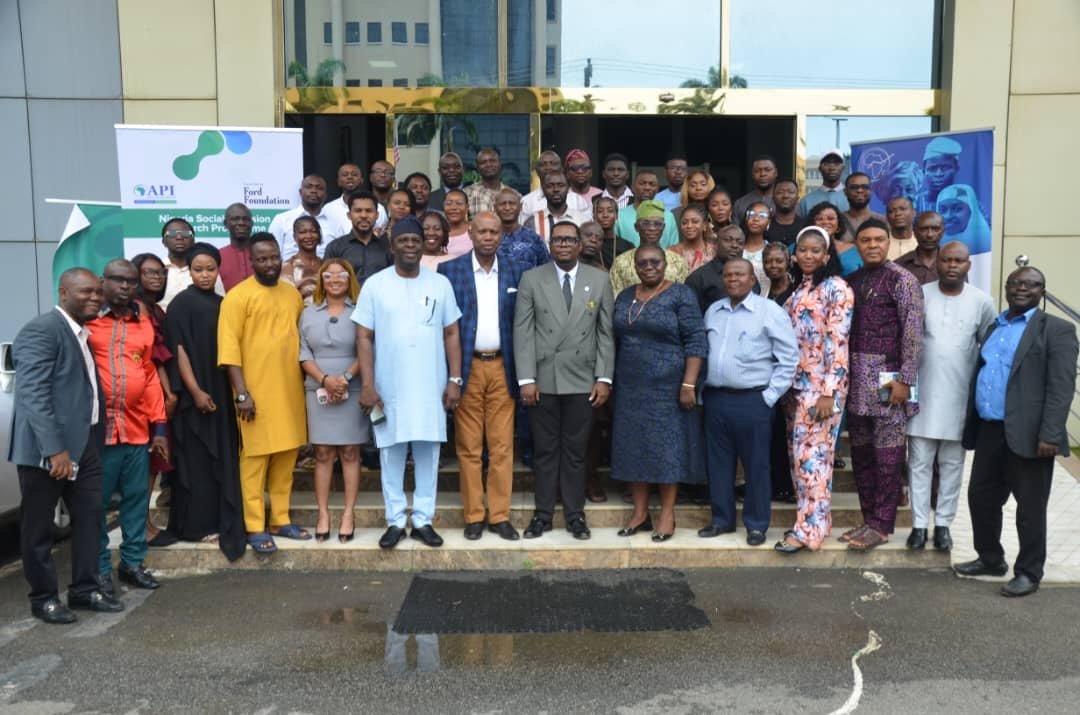
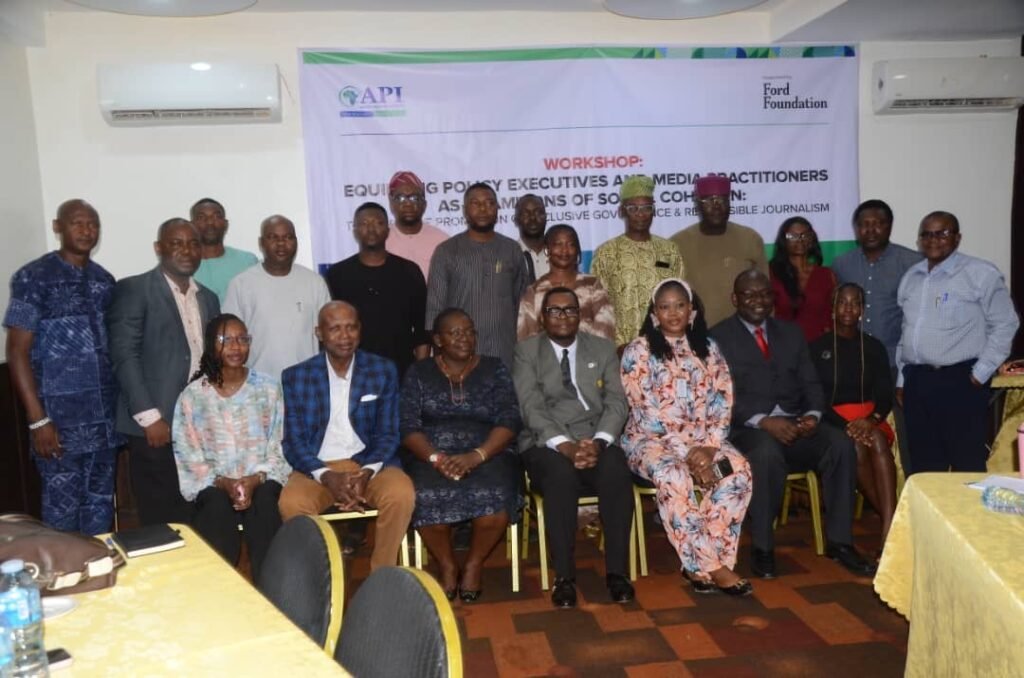
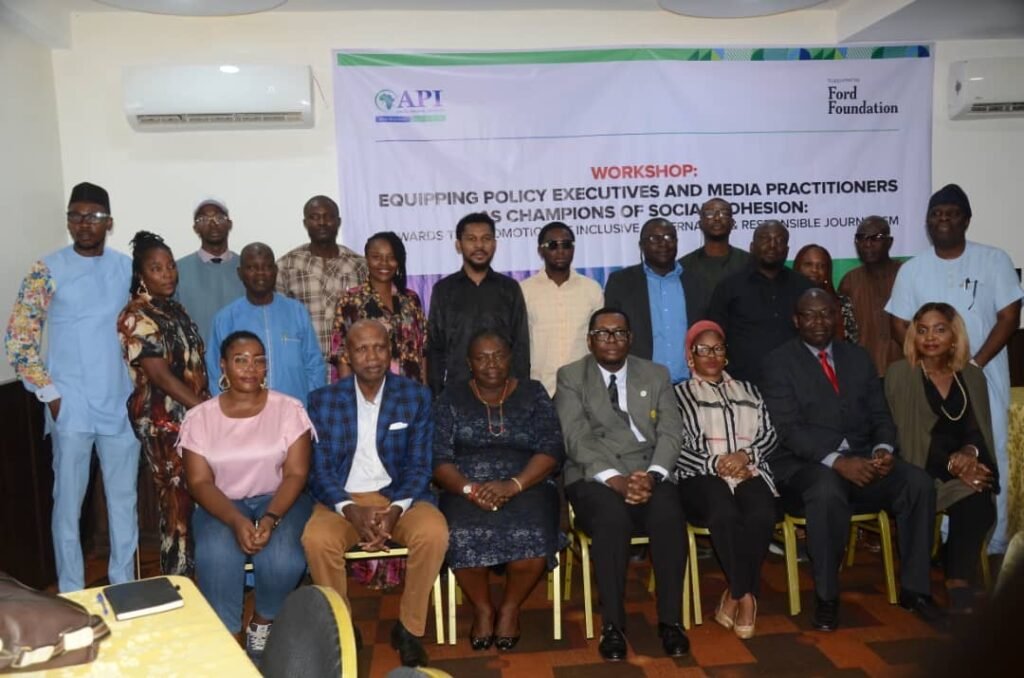
The call was made during a two-day workshop for policy executives and media practitioners in Abuja, themed “Equipping Media Practitioners as Champions of Social Cohesion Towards the Promotion of Responsible Journalism.”
The programme, supported by the Ford Foundation, trained participants on social cohesion reporting, data-driven journalism, and responsible media storytelling using findings from the Nigeria Social Cohesion Survey (NSCS).
Speaking at the workshop, API Executive Director, Prof. Bell Ihua, described social cohesion as the willingness of citizens to cooperate for their collective survival and prosperity.
According to him, social cohesion is built on a shared national identity, trust in government and public institutions, social justice, and active civic participation.
“The concept of social cohesion presupposes that citizens agree to work together, cooperate, survive, and prosper as one people. For this to happen, there must be a shared national identity, trust in institutions, social justice, and civic participation,” he said.
Ihua noted that many of Nigeria’s challenges, including insecurity, declining trust in institutions, and low voter turnout, are symptoms of weak social cohesion.
“You cannot talk about social cohesion without addressing issues such as insecurity, social exclusion, and declining public trust. These challenges reflect deeper fractures within society,” he stated.
He called on governments at all levels to formulate and implement policies that promote inclusion, unity, and peaceful coexistence.
“We need public policies that foster love, inclusion, and national unity. Agitations for secession and growing divisions across the country are indicators that more work needs to be done to strengthen social cohesion,” he added.
Ihua disclosed that API has been conducting nationwide social cohesion surveys since 2019 and will unveil the fifth edition of the Nigeria Social Cohesion Survey on June 25, 2026.
“As researchers, our responsibility is to provide credible data. We have consistently gathered nationwide data across all states and senatorial districts. The media, however, are the burden bearers because they shape public narratives and influence perceptions,” he said.
He further identified widening inequality as a major obstacle to social cohesion, stressing the need for stronger social protection systems and better delivery of government interventions to grassroots communities.
Also speaking, social policy expert, Dr. Olusoji Adeniyi, urged journalists to avoid stereotypes, ethnic profiling, and unverified labels in their reports, warning that such practices undermine national unity.
He said the training exposed participants to more constructive approaches to storytelling and reporting.
“We need to avoid stereotypes and assumptions that associate certain groups with particular crimes. Criminality should be condemned without profiling entire communities or ethnic groups,” he said.
Adeniyi noted that terms such as “Fulani herdsmen” and “unknown gunmen” are often used without adequate verification, potentially reinforcing harmful narratives.
“Criminals are criminals. We should criminalize the act, but humanize the process. Journalists must tell stories from a human perspective while promoting national unity and social cohesion,” he added.
In his remarks, development expert, Odoh Diego Okenyodo, called for improved welfare packages for journalists, arguing that financial security would enable them to produce more objective, patriotic, and socially responsible reports.
“The welfare of journalists is critical. They face enormous responsibilities and personal costs. If they are adequately remunerated and protected, they will be less vulnerable to financial inducements and better positioned to serve the public interest,” he said.
Okenyodo also encouraged journalists to diversify their professional skills beyond news reporting by exploring opportunities in policy analysis, development communication, documentary production, strategic communication, and related fields.
He advised media practitioners to leverage their visibility and credibility to build sustainable careers while continuing to uphold professional standards.
